

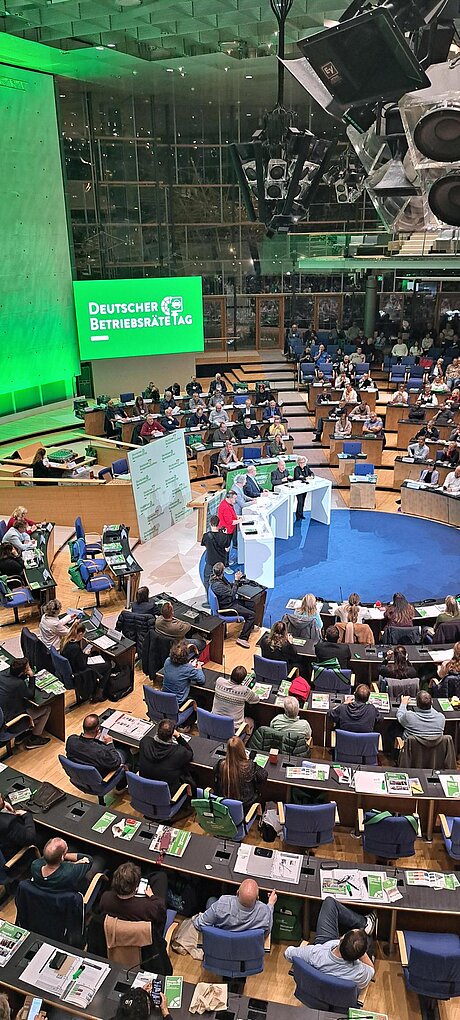
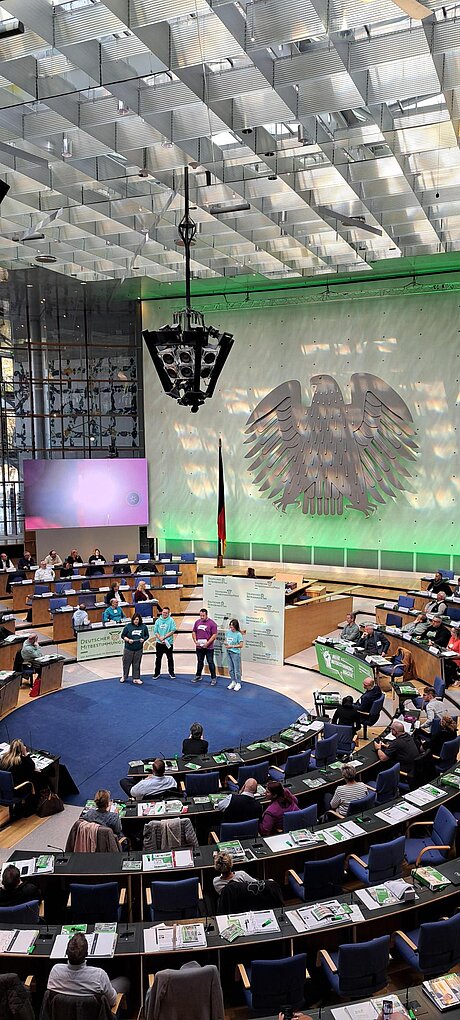
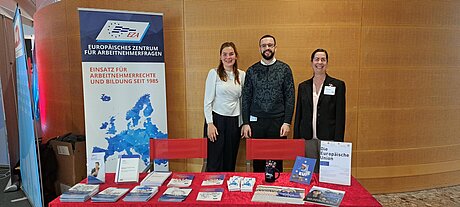
The German Works Councils’ Day took place in Bonn from 10 to 12 November 2026. We, the European Centre for Workers’ Issues (EZA), were also represented there by three colleagues. With our own information stand, we brought a European perspective to the discussions and highlighted the importance of European cooperation in representing workers’ interests.
An informative event
Informative specialist presentations and inspiring practical reports from workplaces offered valuable insights into the current challenges facing co-determination in the workplace. Personal discussions with works council members and other stakeholders in the world of work once again highlighted the importance of strong employee representation and a genuine social partnership.
A highlight of the programme was the political discussion on Wednesday evening, which was also attended by Dennis Radtke, a Member of the European Parliament who has had close ties with EZA for many years. The focus was on employee co-determination and its significance for a sustainable world of work. It became clear that the representation of employees’ interests plays an important role at both national and European level.
Bonn Declaration
The adoption of the Bonn Declaration 2026 for the first time also sent an important signal of solidarity and support for workers’ rights. We expressly support the demands set out therein and regard the declaration as a strong sign of solidarity with workers and all those who campaign day in, day out for good working conditions and effective co-determination.
The Bonn Declaration brings together key concerns relating to employee representation within companies. These include, amongst other things, strengthening co-determination as the foundation of democratic participation, improving the framework conditions for works council work, safeguarding workers’ rights, and creating good and healthy working conditions. It also addresses the challenges posed by digitalisation, artificial intelligence and economic change.
However, the adoption of this first declaration by no means marks the end of the process. Rather, the aim is to further develop these demands jointly and to supplement them with new perspectives. Plans are already in place to continue the process in time for the German Works Councils’ Day in 2027. The focus then will be, in particular, on the 75th anniversary of the Works Constitution Act and the question of how to shape co-determination for the future.
For EZA, annual participation in the German Works Councils’ Day is a valuable opportunity to contribute European perspectives, gain new insights and underline its solidarity with employee representatives. After all, strong co-determination, solidarity and respect for workers’ rights are key prerequisites for a social and democratic Europe.