

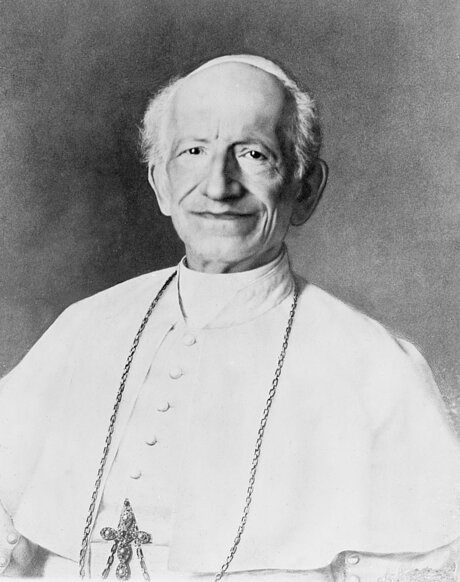
On 15 May 1891, Pope Leo XIII published Rerum Novarum, the Catholic Church’s first major social encyclical – a milestone that continues to shape the foundations of Christian social responsibility to this day. At a time of profound industrial upheaval, the encyclical raised its voice against the exploitation of workers, against inhumane working conditions and against social inequality. It thus laid the foundations for modern Catholic social teaching and, for the first time, explicitly affirmed the dignity of workers, the right to fair wages and the importance of workers’ organisations.
135 years later, Europe and its world of work are once again facing profound changes. Digitalisation, artificial intelligence, precarious forms of employment, demographic change and geopolitical uncertainties are raising new ‘social issues’ that are reminiscent of the challenges of the 19th century – albeit in a different form. Whereas industrialisation at that time overwhelmed social safety nets, today’s digital transformation calls for a renewed commitment to social responsibility and equitable participation.
The fundamental principles of Rerum Novarum – human dignity, solidarity, the common good and subsidiarity – therefore remain as relevant as ever. In particular, social dialogue between workers, employers, politicians and civil society remains indispensable for ensuring fair working conditions, social security and social cohesion. Where economic progress occurs without social responsibility, new forms of inequality and exclusion arise.
For us, therefore, this anniversary is not merely a historical retrospective, but a clear call to action: The social achievements of past generations must be actively defended and adapted to the challenges of our time. Especially in a period of economic and technological upheaval, Europe needs strong worker representation, resilient social partnerships and a social dialogue that not only reacts but also shapes the future.
Rerum Novarum reminds us that economic progress must always serve people – not the other way round. The future of Europe will depend crucially on whether we succeed in combining innovation and competitiveness with social justice and decent work.
135 years after its publication, Pope Leo XIII’s message therefore remains more relevant than ever: social justice is not a historical ideal, but an ongoing obligation